How to Build a Concrete Walkway in Alpharetta, GA
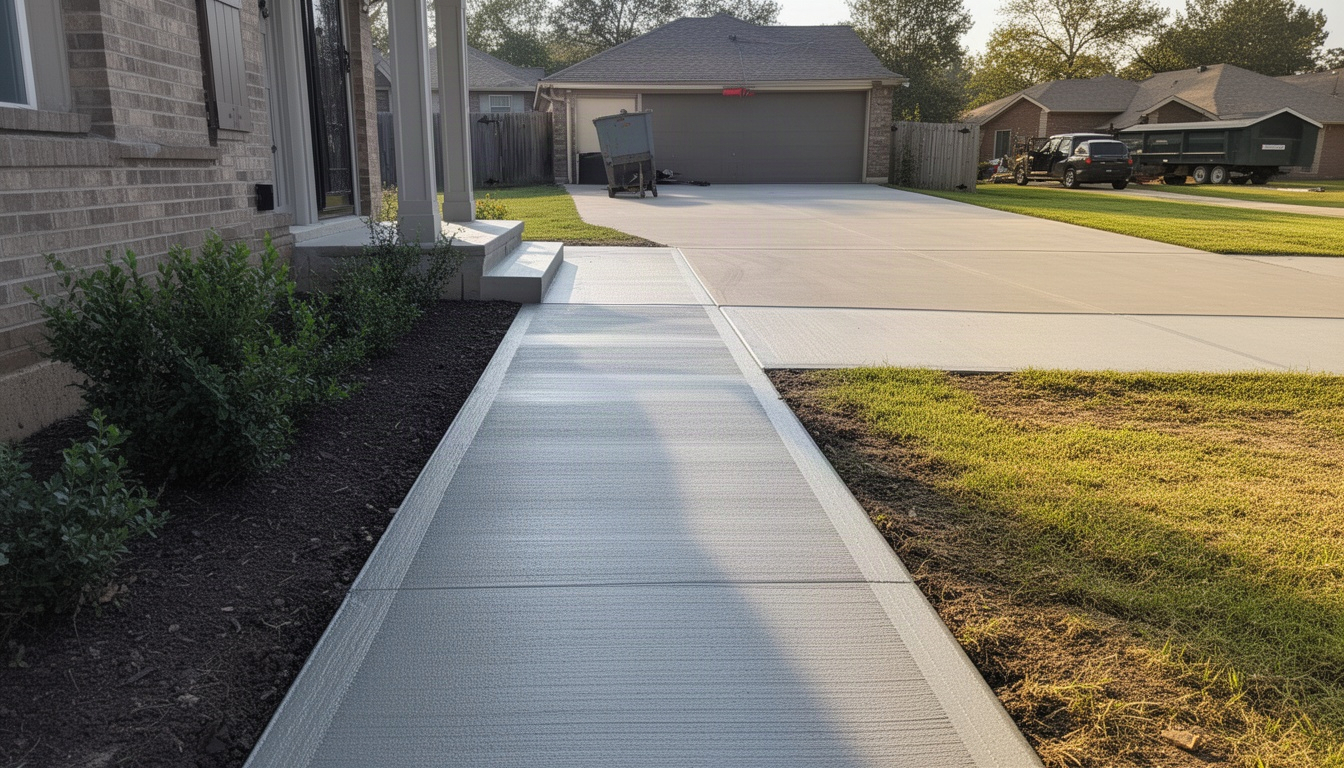
Concrete Walkway Installation in Alpharetta, GA: Dekalb Concrete serves Alpharetta and the surrounding area. Visit dekalbconcretellc.com for a free quote.
TL;DR: Building a concrete walkway in Alpharetta requires accounting for red clay soil (a 4-inch compacted gravel base is mandatory, not optional), checking permit thresholds with the City of Alpharetta, and following ACI standards for freeze-thaw durability. A 160 sq ft walkway costs $640–$1,120 in materials for DIY or $1,280–$2,240 hired out. Plan for 7–10 days total, with 28 days before heavy use.
In This Article
- What Does Building a Concrete Walkway in Alpharetta Actually Involve?
- How Do You Plan and Measure Your Walkway Layout?
- How to Prepare the Ground for Concrete in Alpharetta's Clay Soil
- Building the Form and Pouring the Concrete Mix
- Finishing, Jointing, and Curing Your Walkway the Right Way
- What Does a Concrete Walkway Cost in Alpharetta?
- Frequently Asked Questions About Concrete Walkways in Alpharetta
- Getting Started: Your Next Steps
What Does Building a Concrete Walkway in Alpharetta Actually Involve?
Building a concrete walkway in Alpharetta isn't just a matter of pouring concrete and walking away. (Fultoncountyga.gov) (Usda.gov) Learn more about concrete sidewalks and walkways. Our community sits on Cecil and Madison soil series - expansive Georgia red clay that behaves very differently from the sandy or loam soils that generic DIY guides assume. This means your walkway project here requires specific sub-base preparation, local permit awareness, and climate-conscious curing that most national how-to articles skip entirely.
The process breaks into six core steps: planning and layout, ground preparation (the critical clay-specific phase), form building, concrete mixing and pouring, finishing and jointing, and proper curing. Before you start, verify whether your project needs a permit. Check with the City of Alpharetta Community Development Department before you start to confirm permit requirements for your specific project. If your home is in an HOA-governed community, check your covenants and contact your Architectural Review Committee before pouring.
Understanding these local factors upfront saves time, money, and the frustration of tearing out a failed walkway after a harsh North Georgia winter. Let's walk through each phase with Alpharetta-specific details that make the difference between a walkway that lasts 20 years and one that cracks and heaves within three.
How Do You Plan and Measure Your Walkway Layout?
Start with a clear picture of what you're building. Standard residential walkways are 3 feet wide (minimum for comfortable single-file passage) or 4 feet wide (the ADA-accessible standard and practical for two people walking side by side). For this guide, we'll use a 40-foot-long, 4-foot-wide walkway as our example - that's 160 square feet, a typical residential project.
Measure your route carefully and mark it with stakes and string line. This is where you establish slope for drainage, which matters enormously in Alpharetta's climate. The Portland Cement Association recommends a minimum slope of 1/8 inch per foot away from your home or any structure. For a 4-foot-wide walkway, that means the far edge sits 1/2 inch lower than the edge closest to your house. This gentle slope sheds water quickly in our region's roughly 50 inches of annual rainfall and prevents pooling that accelerates concrete deterioration.
Before you dig, call 811 at least three business days ahead. Georgia law requires utility locating before any ground disturbance - this protects you from hitting buried gas, electric, water, or sewer lines. Mark the layout with spray paint once utilities are marked. The City of Alpharetta's construction inspections page outlines local requirements.
Gather your tools: a tape measure, 2×4 lumber for forms, stakes, a string line, a level, a shovel, and marking paint. You'll also need a plate compactor (rental cost runs $60–$90 per day in the Alpharetta area) and a wheelbarrow for moving gravel.
How to Prepare the Ground for Concrete in Alpharetta's Clay Soil
This is where Alpharetta's red clay demands a different approach than most DIY guides describe. See our guide to concrete foundations and slabs. Cecil and Madison soils have high shrink-swell potential - they expand when wet and contract when dry. Without proper sub-base drainage, this movement cracks concrete and causes heaving that makes your walkway buckle and fail within a few freeze-thaw cycles.
Excavate 8 inches deep total: 4 inches for the concrete slab itself, plus 4 inches for a compacted gravel base. For more details, see How to Plan a Concrete Sidewalk Project in Atlanta. This depth is non-negotiable over clay. Use AASHTO No. 57 crushed stone, an open-graded aggregate that drains freely. Spread it evenly across your excavated area and compact it thoroughly with a plate compactor, making multiple passes until the gravel is firm and won't shift underfoot.
Proper compaction is critical. A loosely spread gravel base will settle unevenly, causing your finished walkway to crack and shift. Rent a plate compactor for a day if you don't own one - the $60–$90 cost is cheap insurance against a failed project.
After compaction, inspect the base. It should be level (use a 4-foot level across the area) and firm. If you see soft spots, add more gravel and compact again. This prep work is where most DIY failures happen - rushing through it leads to cracking within the first year.
Building the Form and Pouring the Concrete Mix
Once your sub-base is ready, build your forms from 2×4 lumber. For more details, see decorative concrete cost in Alpharetta. Stake them every 2 feet with wooden stakes driven into the ground outside the form line. Oil the inside of the forms lightly so concrete doesn't stick - this makes removal easier and cleaner. See all of our services.
For concrete mix, specify 4,000 PSI (pounds per square inch) compressive strength. Learn more about Why Is My Concrete Slab Heaving in Conyers. This is the ACI standard for exterior flatwork exposed to freeze-thaw cycles. Alpharetta's Zone 7b climate sees 20–30 hard freeze days per year, and that seasonal temperature swing (70°F+ between winter lows and summer highs) stresses lower-strength mixes. A 4,000 PSI mix costs only $5–$10 more per cubic yard than standard 3,500 PSI concrete - a worthwhile investment for durability.
Calculate your concrete volume: Length × Width × Depth (in feet) ÷ 27 = cubic yards. For our 40 ft × 4 ft × 0.333 ft (4 inches) slab: 40 × 4 × 0.333 ÷ 27 = 1.97 cubic yards. Order 2.2 cubic yards to account for 10% waste and spillage.
You have two options: ready-mix concrete delivered by truck, or bagged concrete mixed on-site. Ready-mix costs approximately $150–$175 per cubic yard delivered in the Alpharetta area (2025–2026 pricing), so 2.2 yards runs roughly $330–$385 plus delivery fees ($75–$150 for small loads). Bagged concrete (80-lb bags, each covering about 0.6 cubic feet) costs $6–$8 per bag, meaning roughly 45 bags for 2.2 yards at a total material cost of $270–$360 - but requires significant mixing labor.
Ready-mix is faster and produces more consistent results for a first-time builder. Pour from the far end of your walkway and work backward toward your exit point, filling the forms completely. Use a shovel to work concrete into corners and around the forms, eliminating air pockets.
Finishing, Jointing, and Curing Your Walkway the Right Way
Once poured, strike off excess concrete with a straight 2×4 dragged across the top of the forms. Read more about concrete repair and resurfacing. This levels the surface and removes air voids. Follow with a bull float (a large flat tool on a long handle) to smooth the surface further.
For slip resistance in wet conditions, apply a broom finish. Drag a stiff-bristled broom perpendicular to the direction of travel across the still-wet concrete. This creates fine grooves that grip shoes and prevent slipping on rainy days - essential in Alpharetta's climate.
Before the concrete fully hardens, cut control joints every 8–10 feet along the length of the walkway. These joints are intentional weak points that allow the concrete to crack in a controlled, straight line rather than randomly. Use a concrete saw or a jointing tool to cut a groove 1/4 to 1/2 inch deep. Proper jointing prevents the ugly, jagged cracks that otherwise develop as the concrete expands and contracts with seasonal temperature swings.
Curing is critical. Concrete must stay moist for at least 7 days to achieve adequate strength. In Alpharetta's summer heat (average July highs around 89°F, with frequent 90°F+ days), moisture evaporates quickly. Cover the walkway with plastic sheeting immediately after finishing, or apply a liquid curing compound within 20 minutes of finishing. Keep the plastic in place for 7 days, or mist the concrete with water twice daily if you're not using plastic. Never pour concrete when ambient temperature exceeds 90°F without special precautions - ACI standards require shading, chilled water, or retarder admixtures in hot weather to prevent plastic shrinkage cracking.
The walkway is safe for light foot traffic after 24–48 hours. Full strength (28-day cure) is required before heavy loads or regular use. In Georgia's climate, this timeline holds steady year-round, though summer heat can accelerate surface hardening while internal curing continues.
What Does a Concrete Walkway Cost in Alpharetta?
The cost depends on whether you're doing the work yourself or hiring a contractor.
DIY Material Costs: For a standard 4-inch broom-finish walkway, expect $4–$7 per square foot in materials. Learn more about concrete driveway installation in Alpharetta. Our 160 sq ft example walkway runs $640–$1,120 in materials (concrete, gravel, lumber, fasteners, and finishing supplies). This assumes you already own basic tools or can borrow them; add $60–$90 if you rent a plate compactor.
Professional Installation: Concrete walkway contractors in the North Fulton County market charge $8–$14 per square foot installed (2025–2026 pricing). That same 160 sq ft walkway costs $1,280–$2,240 when hired out. This includes site prep, materials, labor, and finishing. Decorative finishes (stamped patterns, exposed aggregate, or colored concrete) add $2–$5 per square foot to the professional cost.
Cost factors that push prices higher include curved forms (more labor), steep slope grading, deeper sub-base requirements in poor soil, or decorative finishes. A simple straight walkway with standard broom finish is the most economical option.
If you're planning a larger project - a driveway, patio, or foundation pour - the per-square-foot cost often decreases slightly due to economies of scale. Dekalb Concrete offers free estimates, so you can compare DIY material costs against professional pricing before deciding.
Frequently Asked Questions About Concrete Walkways in Alpharetta
Do I need a permit to pour a concrete walkway in Alpharetta, GA?
Direct Answer: Permit requirements depend on project scope and location. Check with the City of Alpharetta Community Development Department before you start to confirm your specific project.
Permit thresholds for residential flatwork vary by scope. If your home is in an HOA-governed community, check your covenants and contact your Architectural Review Committee before pouring.
How much does it cost to hire someone to build a concrete walkway in Alpharetta?
Direct Answer: Professional concrete walkway installation in North Fulton County runs $8–$14 per square foot installed (2025–2026 pricing). See our guide to decorative concrete patios.
For a 160 sq ft walkway, that's $1,280–$2,240 total. Read more about How to Hire a Concrete Contractor in Marietta, GA. Pricing varies by contractor, site conditions, and finish type. Dekalb Concrete provides free estimates, so you can get a precise quote for your project before committing. Decorative finishes cost more than standard broom finish.
How long does a concrete walkway take to cure in Georgia's climate?
Direct Answer: Light foot traffic is safe after 24–48 hours; full strength (28-day cure) is required before heavy loads.
In Alpharetta's summer heat, the surface may feel hard within 12–18 hours, but internal curing continues for the full 28 days. Keep the walkway moist for 7 days minimum (cover with plastic or mist twice daily) to achieve adequate strength. Avoid heavy use until 28 days have passed, especially in the first week.
Is concrete or pavers better for a walkway in Alpharetta?
Direct Answer: Concrete is more economical and durable for most Alpharetta homeowners; pavers offer design flexibility but cost 2–3 times more.
Concrete is faster to install, requires less maintenance, and handles Alpharetta's clay soil and freeze-thaw cycles well when properly prepared. Pavers allow custom patterns and are easier to repair individually, but cost significantly more and settle unevenly over clay soil without excellent sub-base work. Decorative concrete (stamped or colored finishes) splits the difference, offering design appeal at a lower cost than pavers.
Why do concrete walkways crack in Alpharetta and how do I prevent it?
Direct Answer: Cracks result from inadequate sub-base preparation, poor curing, or insufficient control joints - all preventable with proper technique.
Alpharetta's expansive red clay causes heaving if the sub-base is too shallow (4 inches compacted gravel is mandatory, not optional). Thermal cracking occurs when control joints are spaced too far apart - cut them every 8–10 feet. Plastic shrinkage cracking happens when concrete dries too fast; keep it moist for 7 days. Freeze-thaw damage occurs with low-strength concrete; use 4,000 PSI minimum. Follow these steps and your walkway will last 20+ years.
Can I pour concrete in the summer in Alpharetta?
Direct Answer: Yes, but avoid pouring when ambient temperature exceeds 90°F without special precautions.
Alpharetta's average July high is 89°F, with frequent 90°F+ days. ACI standards require shading, chilled water, or retarder admixtures when pouring in hot weather to prevent plastic shrinkage cracking. Early morning pours (before 8 a.m.) in spring or fall are ideal. If you must pour in summer heat, use a retarder admixture and keep the concrete moist during curing.
What thickness should a concrete walkway be in North Georgia?
Direct Answer: Standard residential walkways are 4 inches thick - the minimum recommended by ACI for freeze-thaw exposure.
A 4-inch slab with a 4-inch compacted gravel sub-base provides the durability needed for Alpharetta's climate. Thinner slabs (3 inches) are more prone to cracking and heaving over clay soil. Thicker slabs (5–6 inches) are unnecessary for residential foot traffic but may be specified for areas with vehicle crossing.
Getting Started: Your Next Steps
Building a concrete walkway in Alpharetta is achievable for a confident DIYer, but it demands respect for local soil conditions and climate factors that generic guides overlook. The red clay sub-base preparation, proper slope for drainage, and 7-day curing discipline are non-negotiable if you want a walkway that lasts.
If you're weighing DIY versus hiring out, remember that material costs alone run $640–$1,120 for a typical 160 sq ft walkway, while professional installation is $1,280–$2,240. The labor savings from DIY are real, but so are the risks if sub-base prep or curing goes wrong.
Our team at Dekalb Concrete has built hundreds of walkways across Alpharetta, Roswell, Marietta, and the surrounding North Fulton County area. We understand the clay soil challenges, the permit landscape, and the seasonal timing that matters here. If you'd like a free estimate to compare against DIY costs, or if you'd prefer to hand the project to experienced hands, call us or visit dekalbconcretellc.com. Either way, you now have the knowledge to make an informed decision and build a walkway that serves your home well for decades to come.