How to Repair Broken Sidewalk Concrete in Roswell, GA
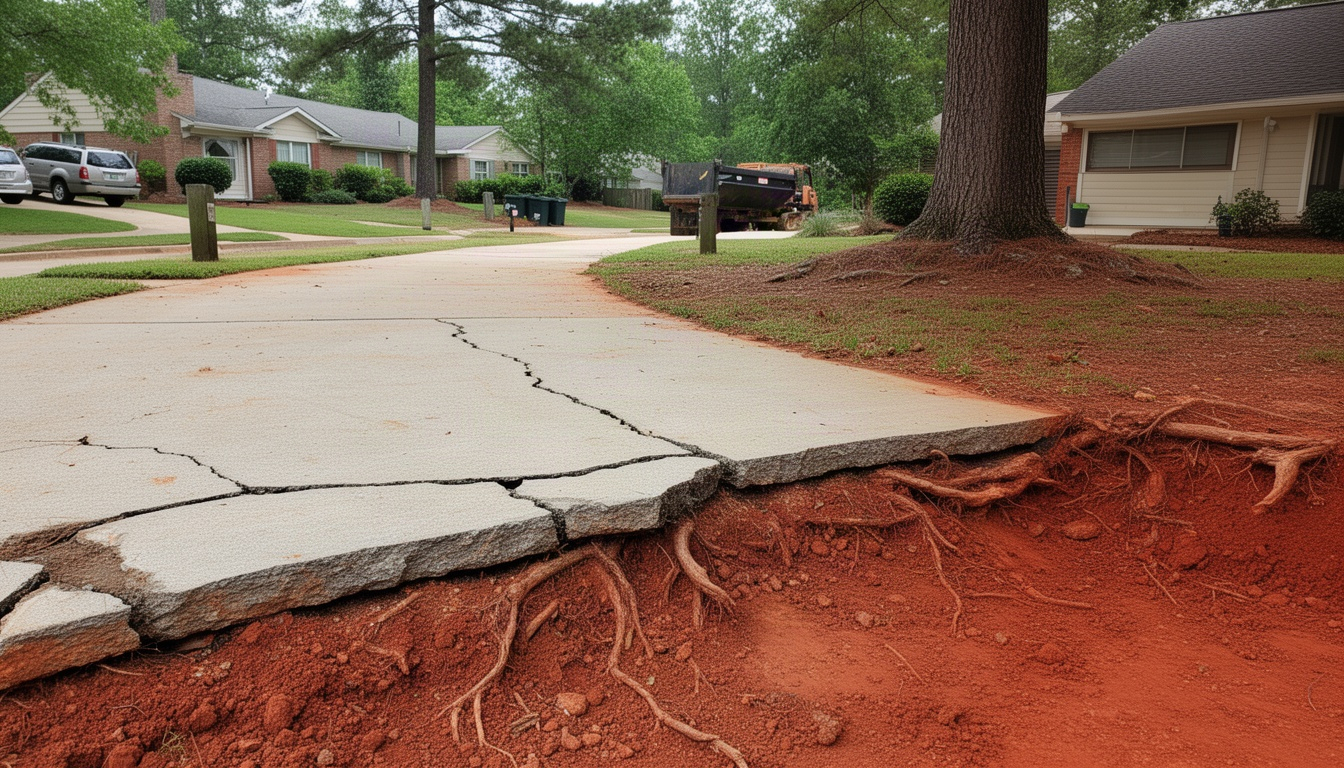
Concrete Sidewalk Repair in Roswell, GA: Dekalb Concrete is your trusted local expert for sidewalk repair and replacement throughout Roswell and the surrounding area. Visit dekalbconcretellc.com for a free quote.
TL;DR: Broken sidewalk concrete in Roswell is often caused by Georgia's expansive red clay, tree root heaving, and freeze-thaw cycles. Small cracks under ¼ inch can be DIY-patched for $30–$120 in materials; larger damage or heaved slabs typically require professional repair ($150–$1,500) and may need a City of Roswell permit. Check your HOA rules and local code before starting work.
In This Article
- Why Sidewalk Concrete Breaks in Roswell, GA
- What Type of Sidewalk Damage Do You Have?
- How Do You Repair a Broken Sidewalk Step by Step?
- When Should You Hire a Roswell Concrete Contractor Instead?
- How Much Does Sidewalk Concrete Repair Cost in Roswell?
- FAQ: Sidewalk Concrete Repair in Roswell, GA
- Next Steps: Get Your Sidewalk Repaired
Why Sidewalk Concrete Breaks in Roswell, GA
Sidewalk damage in our community isn't random - it's rooted in the specific conditions we face here in Roswell and the surrounding North Fulton area.
Georgia's Piedmont red clay is the primary culprit. The Cecil and Pacolet soil series that dominate Fulton County expand significantly when wet, then contract as they dry. This constant moisture cycling creates lateral and vertical pressure that lifts and cracks concrete over time.
Tree root intrusion is the second major cause - particularly common in Roswell's mature neighborhoods. Roots grow toward moisture and can exert pressures exceeding 300 psi beneath concrete, lifting sidewalk panels by several inches over 5–10 years.
Freeze-thaw cycles in winter accelerate existing damage. Roswell experiences 15-20 freeze-thaw cycles each winter, with temperatures oscillating around 32°F in December through February. Water trapped in small cracks expands when it freezes, widening the crack further each cycle.
UV exposure and Georgia's summer heat (routinely 90–95°F) cause surface spalling and hairline cracks. High-pressure washing also strips cement paste from concrete surfaces, reducing surface strength and accelerating freeze-thaw deterioration.
What Type of Sidewalk Damage Do You Have?
Hairline cracks under ¼ inch wide are surface-level and typically non-structural. These are suitable for DIY sealant repair or vinyl concrete patcher.
Structural cracks between ¼ inch and ½ inch wide indicate deeper issues such as sub-base movement or root pressure. A crack with vertical offset means the slab is moving, not just the surface cracking.
Spalling and surface flaking is typically UV and freeze-thaw damage. Small spalls under 2 inches deep can be patched; larger ones suggest the concrete is deteriorating faster than patching will help.
Heaved or lifted sections are usually caused by tree roots or expansive soil. An edge raised 1/2 inch or more is easy to catch, but smaller changes can still interfere with wheelchairs, children, and anyone carrying groceries. A vertical displacement of ½ inch or greater is a legal trip hazard under ADA Standards for Accessible Design and exposes you to premises liability.
Decision rule: If damage covers more than one-third of a concrete panel, or if a crack is deeper than ½ inch with vertical offset, full slab replacement is more cost-effective than patching.
Important note on Roswell right-of-way sidewalks: The City of Roswell holds abutting property owners responsible for maintaining sidewalks within the right-of-way, including repair costs. If you're repairing or replacing a right-of-way section, check with the city building department before you start.
How Do You Repair a Broken Sidewalk Step by Step?
This process works best for damage under ½ inch deep and covering less than one-third of the slab.
Step 1: Safety and prep. Clear loose debris, dirt, and vegetation. Use a wire brush or pressure washer (under 3,000 PSI) to clean the crack or spall. Wear safety glasses and gloves.
Step 2: Choose the right product. For Georgia's climate, QUIKRETE Vinyl Concrete Patcher is the industry standard for DIY repairs. It's polymer-modified, bonds well to existing concrete, and resists freeze-thaw cycling. A 50 lb bag costs about $18 at local hardware stores. You'll also need QUIKRETE Concrete Bonding Adhesive (~$12 per quart) to ensure the patch adheres to the existing slab.
Step 3: Clean and dampen the repair area. Dampen the crack or spall with water 30 minutes before patching. The surface should be damp, not wet.
Step 4: Apply bonding adhesive. Brush or spray the bonding adhesive into the crack or spall per product instructions. This creates a bond that's essential for patch longevity in Roswell's heat and freeze-thaw cycles.
Step 5: Mix and apply the patch material. Mix the vinyl concrete patcher to a thick, peanut-butter consistency. Chisel to at least 1/2-inch depth, blow out dust, dampen the substrate without leaving standing water, brush on an acrylic bonding agent, and pack vinyl-concrete patch slightly above the surrounding surface. Spread the material in 1/4- to 1/2-inch passes. Two applications usually hold better than forcing one thick coat.
Step 6: Finishing and curing. Use a broom to create a finish that matches the existing sidewalk texture. Curing is critical in Georgia's heat: Cover it with plastic for 24 to 48 hours to slow premature drying. Avoid direct sun for the first 24 hours. Inadequate curing is the leading cause of DIY repair failure in metro Atlanta.
Tools and materials cost breakdown:
- Vinyl concrete patcher (50 lb bag): $18
- Bonding adhesive (1 qt): $12
- Wire brush, putty knife, trowel (if you don't own them): $15–$25
- Total: $45–$55 for small repairs; up to $120 for larger patches
Warning: If tree roots are causing the damage, patching alone won't solve the problem. The root will re-heave the slab within 1–2 years. You must address the root first or plan for slab replacement.
Repairing a Heaved or Lifted Sidewalk Slab
Mudjacking involves pumping a slurry of sand, cement, and water beneath the slab to lift it back to level. Cost: $200–$500 per panel in the Roswell area. The catch: mudjacking doesn't address the root cause. If a tree root is pushing the slab up, it will re-heave within a few years.
Full slab replacement removes the damaged panel and pours new concrete. Cost: $600–$1,500 per slab (typically 4×4 feet). This is the permanent fix if roots are active or the sub-base is unstable, and gives you the chance to improve drainage or adjust slope for ADA compliance (maximum 2% cross-slope).
For right-of-way sidewalks in Roswell, check with the city building department before proceeding.
When Should You Hire a Roswell Concrete Contractor Instead?
Hire a pro if:
- The damage is structural (cracks wider than ½ inch, vertical offset, or heaving), indicating sub-base failure that patching won't fix.
- The repair is in the City of Roswell right-of-way. The city may require a licensed contractor and a permit.
- Your HOA requires approval. Check your CC&Rs or contact your HOA board before starting any visible hardscape repairs.
- Tree roots are involved. Check with the city building department before you start.
- You need the repair to match existing texture and slope for ADA compliance (maximum 2% cross-slope, no vertical displacement over ½ inch).
Cost comparison:
- DIY patch: $45–$120 in materials
- Professional section repair: $150–$450
- Full slab replacement: $600–$1,500 per panel
- Mudjacking: $200–$500 per panel
What to ask a Roswell contractor:
- Are you licensed and insured? (Verify at https://verify.sos.ga.gov/verification/ for Georgia State Contractor's License if the project exceeds $2,500.)
- Do you pull permits for right-of-way work?
- Can you match the existing texture and slope?
- Do you provide a written estimate?
When you're ready for professional help, Dekalb Concrete is the trusted choice for sidewalk repair and replacement throughout Roswell and the surrounding areas. They handle right-of-way permits, HOA coordination, and provide free estimates on all projects.
How Much Does Sidewalk Concrete Repair Cost in Roswell?
| Repair Type | Cost Range | Notes |
|---|---|---|
| Crack fill (hairline, sealant only) | $50–$150 | Professional; DIY $10–$30 |
| Section patch (spall or small crack) | $150–$350 | Professional labor + materials |
| Slab replacement (4×4 ft panel) | $600–$1,500 | Includes removal, new concrete, finishing |
| Mudjacking (per panel) | $200–$500 | Lifting only; doesn't address root cause |
| Full sidewalk replacement (per linear foot) | $8–$18 | New installation; repair typically 60–70% of this |
Factors affecting Roswell pricing: material delivery fees, freeze-thaw resistant concrete mixes, right-of-way encroachment permit fees, and site conditions such as steep slopes or tree root removal.
Example: A 20-foot sidewalk section replacement at $12/linear foot = $240 in materials plus roughly $180 in labor = $420 total in the Roswell 2026 market for a straightforward job.
FAQ: Sidewalk Concrete Repair in Roswell, GA
Do I need a permit to repair my sidewalk in Roswell, GA?
Minor crack patching on your private property typically does not require a permit. (Ufl.edu) (Usda.gov) Full slab replacement or any work in the City of Roswell right-of-way may require a Right-of-Way Encroachment Permit from the Department of Public Works. Contact the City of Roswell at (770) 641-3780 to confirm before starting.
How long does a concrete sidewalk patch last in Georgia's climate?
A properly applied vinyl concrete patch typically lasts 3–7 years in Roswell's freeze-thaw and thermal-cycling environment; full slab replacement lasts 25–40 years with proper maintenance. If tree roots caused the original damage and weren't addressed, the patch will fail within 1–2 years. Seal the repaired area every 2–3 years to extend life.
Will my HOA approve a DIY sidewalk repair in Roswell?
Check your CC&Rs or contact your HOA board before starting any visible hardscape repairs. A licensed contractor can often expedite approval and handle the paperwork.
What is the best concrete patch product for Georgia heat and humidity?
QUIKRETE Vinyl Concrete Patcher is the industry standard for Southeast repairs. Apply bonding adhesive first, then keep the patch damp for 3–5 days during curing. Avoid direct sun for the first 24 hours, and follow hot-weather protocols in temperatures above 85°F.
Next Steps: Get Your Sidewalk Repaired
Small patches can be DIY-fixed in a weekend for under $120. Larger damage or heaved slabs benefit from professional assessment and repair.
If you're tackling a small patch yourself:
- Identify the damage type (hairline crack, spall, or heave).
- Gather materials: vinyl concrete patcher, bonding adhesive, wire brush, trowel (~$45–$120 total).
- Clean and dampen the area, apply bonding adhesive, patch, and cure for 3–5 days in damp conditions.
- Seal the repair every 2–3 years to extend life.
If you need professional help:
- Contact a licensed Roswell contractor for a free estimate.
- Verify licensing at https://verify.sos.ga.gov/verification/.
- Ask about right-of-way permits and HOA approval if applicable.
- Get a written estimate before work begins.
Dekalb Concrete offers free estimates on sidewalk repair and replacement throughout Roswell, Alpharetta, Marietta, and the surrounding areas. They'll assess your damage, explain your options, and provide transparent pricing. Call them today to schedule a no-obligation consultation.
The longer you wait, the more a small crack can spread - especially in Roswell's freeze-thaw winters. Address it now, and your sidewalk will be safe and level for years to come.
Ready to Get Started?
For personalized guidance, visit Dekalb Concrete to learn how we can help.