Why Do Sidewalks Crack and Settle in Atlanta?
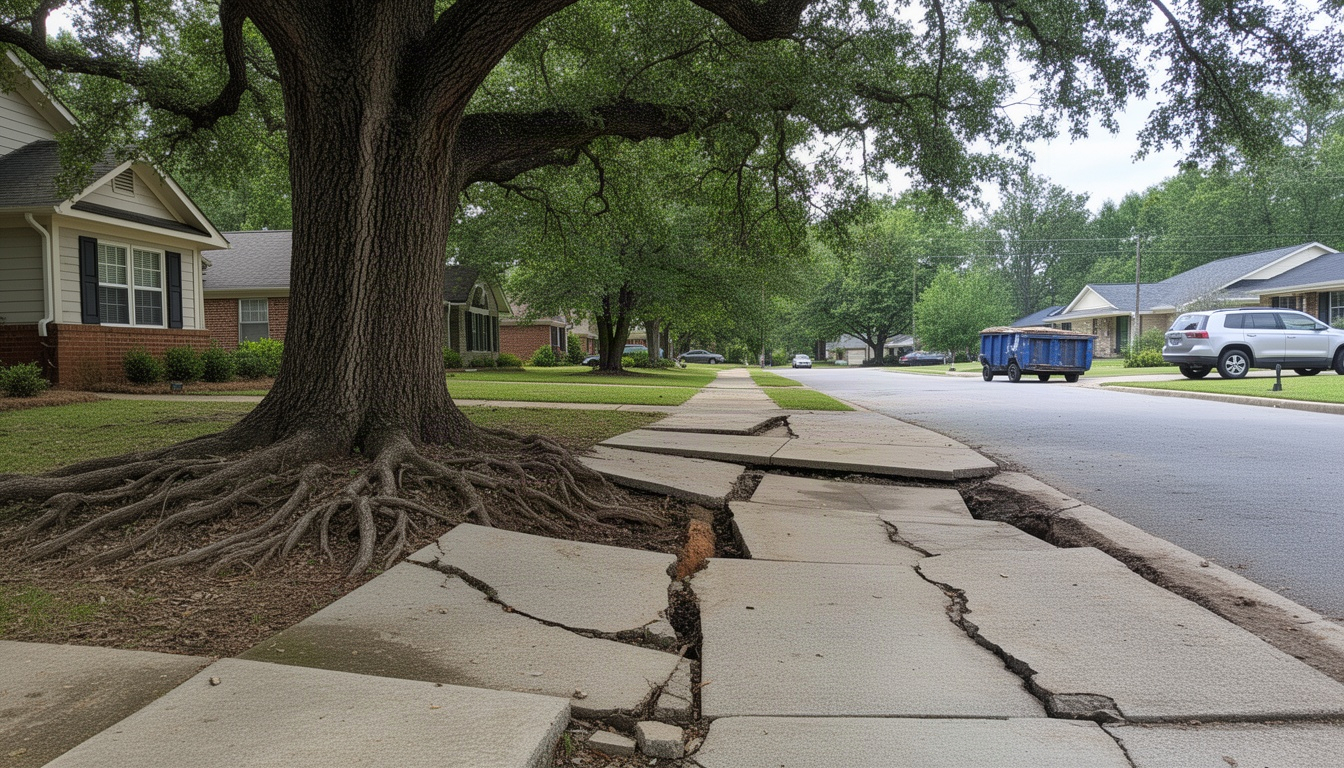
Concrete Driveway Installation in Atlanta, GA: Dekalb Concrete serves Atlanta and the surrounding area. Visit dekalbconcretellc.com for a free quote.
TL;DR: Atlanta's sidewalks crack and settle primarily because of expansive red clay soil that shifts with seasonal moisture changes, aggressive tree roots that push up concrete slabs, and freeze-thaw cycles that widen cracks over time. Understanding these local causes helps you decide whether repair or replacement makes sense for your property.
In This Article
- Why Atlanta Sidewalks Crack and Settle More Than Most Cities
- How Does Georgia Red Clay Soil Cause Sidewalk Settling?
- Do Tree Roots Really Crack Atlanta Sidewalks?
- Other Causes: Poor Installation, Drainage, and Weather Cycles
- How Can You Tell if Your Sidewalk Needs Repair or Full Replacement?
- Finding a Qualified Concrete Contractor in Atlanta
- Frequently Asked Questions
- Next Steps
Why Atlanta Sidewalks Crack and Settle More Than Most Cities
If you've noticed your sidewalk buckling, cracking, or creating a trip hazard, you're not alone here in Atlanta. (Usda.gov) (Usda.gov) Learn more about concrete sidewalk installation and repair in Atlanta. The answer to why do sidewalks crack and settle in Atlanta comes down to three interconnected local factors: the soil beneath our feet, the trees lining our streets, and our region's weather patterns.
Atlanta sits on Piedmont residual clay - a soil type that expands when wet and shrinks when dry. This shrink-swell cycle is the primary culprit behind most sidewalk settlement we see across Fulton, DeKalb, and Gwinnett counties. Add Atlanta's dense urban tree canopy, and you've got aggressive roots pushing up concrete from below. Then there's the freeze-thaw cycle: Atlanta experiences 10–20 freeze-thaw events per year, enough to progressively widen micro-cracks over just 3–5 years.
The result? Sidewalks that were installed 25–30 years ago - many dating back to Atlanta's 1996 Olympic infrastructure push - are now reaching the end of their typical lifespan and failing simultaneously across neighborhoods like Inman Park, Candler Park, and Grant Park.
How Does Georgia Red Clay Soil Cause Sidewalk Settling?
Georgia's red clay is not your enemy - it's simply doing what clay does. See our guide to proper sub-base preparation for concrete in Atlanta. The problem is that concrete sidewalks are rigid, and clay is dynamic.
Fulton and DeKalb County soils are classified by the USDA as Piedmont residual clay with high shrink-swell potential. These soils contain clay minerals that absorb water and expand, then release that water and contract. A 4-inch concrete slab sitting on this soil experiences real vertical movement: 1–3 inches of displacement over 5–10 years is documented in moderate shrink-swell conditions like ours.
Here's how the cycle works: During Atlanta's wet winters and springs (we average about 50 inches of annual rainfall), clay beneath your sidewalk absorbs moisture and expands. The slab rises. Then, during summer and early fall, the clay dries out and shrinks, creating voids underneath. The slab settles - sometimes unevenly. Over multiple cycles, the slab cracks, tilts, or develops a vertical lip where two panels meet.
What Is the Shrink-Swell Cycle and Why Does It Matter?
The shrink-swell cycle is a seasonal pattern of expansion and contraction. When soil is wet, clay particles absorb water molecules, causing the soil to swell. When it dries, those water molecules leave, and the soil shrinks back - but not always to the same level. Repeated cycles create cumulative damage.
What makes Atlanta's pattern especially destructive is that we experience both extremes: wet winters followed by dry summers. This alternating stress is harder on concrete than either a consistently wet climate (like coastal areas) or a consistently frozen one (like northern states). The Federal Highway Administration notes that regions with alternating wet-dry seasons impose the greatest cumulative stress on pavements.
Under a sidewalk, this means the soil support is constantly shifting. Cracks that start as hairline fractures widen with each cycle. Water infiltrates those cracks, accelerating deterioration. Within 20–30 years, a sidewalk that was properly installed can become unsafe.
Do Tree Roots Really Crack Atlanta Sidewalks?
Yes - and Atlanta's tree canopy makes this a particularly acute problem. For more details, see planning a sidewalk replacement near trees in Atlanta.
Tree roots don't actually "crack" concrete in the way you might imagine. Instead, they grow toward moisture and create uplift pressure. Roots preferentially exploit the moist microenvironment beneath concrete slabs (where water pools and soil stays damp longer). As roots thicken, they generate pressure that can exceed the tensile strength of standard concrete. The slab heaves upward, creating a vertical displacement or a pronounced lip.
In Atlanta, the most problematic street trees are willow oaks and water oaks - both common in intown neighborhoods and both producing dense, fibrous lateral root systems that extend into the top 12–18 inches of soil, exactly where sidewalk base material sits. Bradford pears, planted widely across Atlanta suburbs in the 1980s and 1990s, have largely been removed due to invasiveness and structural failure, but their legacy root systems continue to cause heave in older neighborhoods. See all of our services.
How to tell root damage from soil settlement: Root heave typically creates a localized, pronounced vertical displacement - one slab panel is significantly higher than its neighbor. Soil settlement, by contrast, tends to be more gradual and widespread, affecting multiple panels in a gentle slope. Root damage often appears near the tree trunk; soil settlement can occur anywhere on the sidewalk.
If you're planning a sidewalk replacement near a mature tree, you'll want to consider root barriers or tree removal as part of the project. This is where professional guidance matters - a contractor familiar with Atlanta's tree species and soil conditions can help you avoid repeating the same failure.
Other Causes: Poor Installation, Drainage, and Weather Cycles
Beyond red clay and tree roots, three secondary factors accelerate sidewalk failure here in Atlanta. Read more about fixing concrete spalling and surface cracks in Atlanta.
Poor compaction at installation is the first. Many sidewalks installed during Atlanta's rapid post-WWII and 1990s development periods were laid over inadequately compacted fill soil. As that fill consolidates under traffic and moisture cycling, the slab settles unevenly. This is especially common on lots where grading was aggressive or where fill was imported without proper compaction testing.
Drainage failures are the second. Atlanta receives approximately 50 inches of annual rainfall. When water pools under a slab - because the base wasn't sloped properly or because the surrounding grade directs runoff underneath - it erodes fine soil particles over time, creating voids. The slab then settles into those voids. This process is accelerated in clay soils, where water infiltration can cause localized softening of the subgrade.
Freeze-thaw cycles are the third. Atlanta averages 15 freeze-thaw events per year (NOAA climate data). Each cycle can widen a hairline crack by approximately 0.01 inches. Over 3–5 years, that adds up to visible damage. Freeze-thaw is less destructive here than in northern states, but it's enough to turn a minor crack into a structural problem, especially when combined with clay settlement.
How Does Atlanta's Rainfall Affect Concrete Slabs?
Atlanta receives approximately 50 inches of annual rainfall. This matters because water is the enemy of concrete longevity. Water infiltrates cracks, freezes and expands in winter, and erodes the base material beneath slabs. In clay soils, water infiltration causes localized softening and particle migration - the soil literally washes away, leaving voids.
Proper drainage - sloping the sidewalk away from structures, installing perimeter drainage if needed, and ensuring the base material is well-compacted - can extend sidewalk life by 10+ years. Neglecting drainage accelerates failure.
How Can You Tell if Your Sidewalk Needs Repair or Full Replacement?
The decision hinges on three factors: the severity of displacement, whether the underlying cause is still active, and the extent of damage.
Use this simple checklist:
- Is the vertical displacement a trip hazard? The ADA standard is ≥1/2 inch (0.5 inches). If your sidewalk has a lip greater than 1/2 inch, it's legally a barrier and should be addressed.
- Learn more about find a trusted concrete repair contractor in Atlanta. Is the damage localized or widespread? If only one or two panels are affected and the cause (like a tree root) can be addressed, repair or mudjacking may work. If 30% or more of the slab is affected, replacement is usually more cost-effective.
- Is the underlying cause ongoing? If soil settlement is still occurring (you can tell by watching the slab over a season or two), repair alone won't hold. You'll need to address the soil issue first - better drainage, soil stabilization, or in severe cases, underpinning.
Cost comparison in Atlanta's market:
- Concrete grinding (for minor trip hazards, 1/4–3/4 inch displacement): $2–4 per linear foot
- Mudjacking (lifting a settled slab): $3–8 per square foot
- Polyurethane foam lifting (more durable in wet clay): $5–15 per square foot
- Full slab replacement: $8–15 per square foot
For a 100 square foot settled section, mudjacking at $5/sq ft costs $500; replacement at $10/sq ft costs $1,000. Repair wins if the soil issue is corrected first. But if roots are still active or soil settlement is ongoing, replacement is the better long-term investment.
A note on responsibility: Under Atlanta City Code Section 138-24, property owners are responsible for maintaining sidewalks adjacent to their property, even though the city owns the right-of-way. The 2018 ADA class-action lawsuit against Atlanta (Advocates for the Disabled v. City of Atlanta) catalyzed the Renew Atlanta bond program, which has funded some public sidewalk repairs, but homeowner liability remains for most residential frontage. As The Bitter Southerner reported in "Can't Get There From Here," Atlanta's sidewalk policy and lack of consistent enforcement has produced an incomplete, uneven sidewalk network that places much of the maintenance burden squarely on individual property owners rather than the city.
Finding a Qualified Concrete Contractor in Atlanta
When you're ready to repair or replace a damaged sidewalk, working with a licensed, insured local contractor makes a real difference. Here in Atlanta, you want someone who understands Piedmont clay, knows the local freeze-thaw patterns, and can assess whether the underlying soil issue will recur.
What to look for:
- Licensed and insured in Georgia
- Familiar with Atlanta's soil conditions and local building codes
- Willing to provide a written estimate with photos and explanation of the root cause of the damage
- Offers a free estimate to assess your sidewalk
- Can discuss whether repair, lifting, or replacement is the right choice for your situation
Dekalb Concrete serves Atlanta, DeKalb, Gwinnett, Marietta, Roswell, and surrounding areas. They offer free estimates on sidewalk repair and replacement, and they're familiar with the specific soil and tree-root challenges we face here in the metro area. Whether you need a quick assessment or a full replacement plan, getting a professional evaluation before you decide is always the smart move.
Frequently Asked Questions
How much does it cost to repair a cracked sidewalk in Atlanta?
Direct Answer: Repair costs range from $2–4 per linear foot for grinding to $3–8 per square foot for mudjacking, depending on the damage type and extent.
For a typical 100 square foot section, expect $300–$800 for repair. Full replacement runs $800–$1,500 for the same area. The best way to know your actual cost is to get a free estimate from a local contractor who can assess whether the underlying cause (soil settlement, tree roots, poor drainage) requires repair or replacement.
Is the City of Atlanta responsible for sidewalk repairs, or is it the homeowner?
Direct Answer: Under Atlanta City Code Section 138-24, the property owner is responsible for maintaining the sidewalk adjacent to their property, even though the city owns the right-of-way.
The city's Renew Atlanta bond program has funded some public sidewalk repairs, particularly for ADA compliance, but homeowners remain liable for most residential frontage. If a cracked sidewalk creates a trip hazard on your property, you're responsible for fixing it. Check with the city building department before you start work to confirm any permitting requirements.
Can mudjacking fix a settled Atlanta sidewalk, or is full replacement needed?
Direct Answer: Mudjacking can work if the underlying soil issue is corrected first, but it's less durable in Atlanta's wet clay than polyurethane foam lifting.
Mudjacking pumps a cementitious slurry beneath the slab to lift it back into place. In Atlanta's high-rainfall environment (50 inches annually), that slurry can wash out during heavy rain events. Polyurethane foam lifting is more stable in wet clay. However, if soil settlement is still occurring, lifting alone won't solve the problem - you'll need to address drainage, compaction, or soil stabilization. A professional assessment will tell you whether lifting or replacement is the better investment.
How do I know if tree roots or soil settlement caused my sidewalk to crack?
Direct Answer: Root heave creates a localized, pronounced vertical displacement near the tree; soil settlement appears as gradual, widespread tilting across multiple panels.
If one slab panel is significantly higher than its neighbor and the tree is nearby, roots are likely the culprit. If the sidewalk slopes gradually over several panels with no obvious tree, soil settlement is more probable. A contractor can excavate a small section to confirm the cause and recommend whether tree removal, root barriers, or soil correction is needed.
How long does a concrete sidewalk last in Atlanta's climate?
Direct Answer: Residential concrete sidewalks typically last 20–40 years in Atlanta; most reach failure around 30 years.
Georgia Tech transportation professor Randy Guensler documented a 30–40 year lifespan for Atlanta sidewalks. Many intown neighborhoods have sidewalks installed in the 1960s–1980s, meaning they're now at or past their expected life. Proper maintenance - addressing cracks early, ensuring good drainage, and managing tree roots - can extend that lifespan by 5–10 years.
Does Atlanta's red clay void my concrete warranty or affect new installations?
Direct Answer: No, but it requires proper sub-base preparation and drainage design to prevent premature failure.
Red clay is not a defect; it's a known soil condition. Contractors who understand Piedmont clay will specify adequate compaction, proper slope for drainage, and sometimes soil stabilization or underpinning to ensure long-term performance. When getting a free estimate for a new sidewalk, ask the contractor how they're accounting for clay settlement and what warranty or guarantee they offer.
What is the legal trip-hazard threshold for cracked sidewalks in Atlanta?
Direct Answer: The ADA standard is a vertical displacement of ≥1/2 inch (0.5 inches); anything greater is considered a barrier and should be repaired or replaced.
Atlanta's public sidewalks are subject to this federal standard. If your sidewalk has a lip or step greater than 1/2 inch, it's legally a trip hazard. Cracks narrower than 1/4 inch are typically cosmetic; cracks wider than 1/4 inch indicate structural distress and should be evaluated by a professional.
Next Steps
If you're seeing cracks, settlement, or trip hazards on your sidewalk, the first step is a professional assessment. A contractor familiar with Atlanta's red clay, tree canopy, and freeze-thaw patterns can tell you whether you're looking at a quick repair or a full replacement - and what the underlying cause is so you don't repeat the same failure.
Dekalb Concrete offers free estimates on sidewalk repair and replacement throughout Atlanta and the surrounding metro area. Call today to schedule an assessment and get a clear picture of your options.
Ready to Get Started?
For personalized guidance, visit Dekalb Concrete to learn how we can help.