How to Prepare Ground for a Concrete Driveway in Atlanta
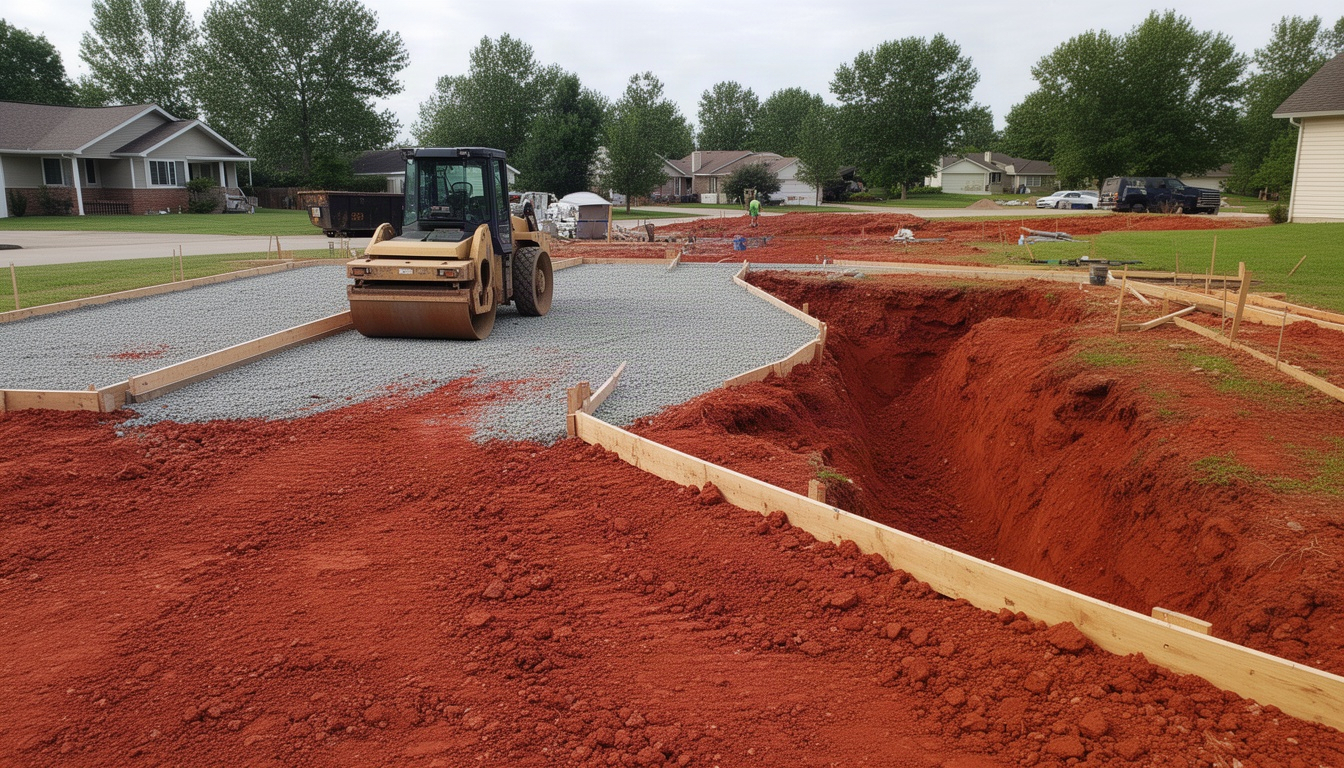
How To Prepare Ground Concrete Driveway in Atlanta, GA: Dekalb Concrete serves Atlanta and the surrounding area. Visit dekalbconcretellc.com for a free quote.
TL;DR: Atlanta's red clay soil requires 8–10 inches of total excavation depth (4 inches concrete + 4–6 inches compacted gravel base), proper drainage slope of 1% away from structures, and geotextile fabric separation to prevent premature failure. Call 811 before digging, obtain permits from the City of Atlanta or your county, and plan your pour for fall or early spring to avoid summer heat stress on fresh concrete.
In This Article
- Why Atlanta Soil Makes Driveway Prep Different
- What Tools and Materials Do You Need Before Starting?
- Step 1 - Mark, Excavate, and Remove Existing Material
- Step 2 - Test and Treat the Subgrade Soil
- Step 3 - Install and Compact the Gravel Base Layer
- Step 4 - Grade, Form, and Final Check Before Pouring
- How Much Does Driveway Ground Preparation Cost in Atlanta?
- Finding a Qualified Local Contractor in Atlanta
- Frequently Asked Questions About Driveway Prep in Atlanta
- Next Steps: Get Your Driveway Project Started
Why Atlanta Soil Makes Driveway Prep Different
Here in Atlanta, the ground beneath your driveway isn't like the sandy soils you'll find in coastal Georgia. We're sitting on Piedmont red clay - a dense, moisture-retentive soil that expands and contracts with seasonal water changes. This is the single biggest reason why generic driveway prep guides fail in our area.
Atlanta averages 49.7 inches of rain annually, concentrated heavily in winter and spring. That moisture gets trapped in our clay subgrade, creating what engineers call "shrink-swell potential." When clay absorbs water, it expands; when it dries, it shrinks. Repeat that cycle a few hundred times, and your driveway develops cracks, heaves, or sinks unevenly - sometimes within just 3–5 years.
The good news: proper ground preparation prevents nearly all of these failures. The catch is that "proper" in Atlanta means something different than it does in sandy regions. You need a thicker base layer, better compaction equipment, and drainage that actually works with our climate instead of against it.
Skipping subgrade compaction on Atlanta clay is the leading cause of premature driveway failure we see across DeKalb, Gwinnett, and Fulton counties. A plate compactor alone won't cut it on cohesive clay; you need a jumping jack (rammer) compactor to achieve the density required to support a concrete slab long-term.
What Tools and Materials Do You Need Before Starting?
Before you break ground, inventory your equipment and materials. Renting versus buying depends on your project scope, but here's what a standard 600 sq ft two-car driveway requires:
Essential Tools:
- Plate compactor (for gravel base): $65–$90/day rental at Atlanta Home Depot or Sunbelt Rental
- Jumping jack (rammer) compactor (for clay subgrade): $85–$120/day rental
- Laser level or string line and 4-foot level
- Sod cutter (if removing existing grass): $50–$75/day rental
- Wheelbarrow, shovel, tamper, and measuring tape
Materials:
- #57 crushed granite (the standard aggregate base in Atlanta): 4–6 inches deep, typically 14–16 tons for a 600 sq ft driveway
- Geotextile fabric (separation layer): 1 roll, roughly $30–$50
- Rebar (#3 or #4, 18-inch grid spacing) or wire mesh for reinforcement
- Wooden or steel forms for edge containment
Material Costs (2026):
- Crushed stone (#57 granite): $35–$55 per ton delivered, so roughly $500–$900 for a standard driveway base
- Geotextile fabric: $30–$50
- Rebar or wire mesh: $40–$80
- Forms and miscellaneous: $50–$100
Total DIY material cost: $620–$1,130 for ground prep alone (not including concrete). Contractor prep costs run $1.50–$3.00 per square foot, meaning $900–$1,800 for labor on the same 600 sq ft project.
Step 1 - Mark, Excavate, and Remove Existing Material
Start by marking your driveway boundaries with stakes and string line. This defines your work area and helps you maintain straight edges. Use a measuring tape to verify width and length before you dig.
Excavation depth for Atlanta: You need 8–10 inches total - 4 inches for the concrete slab itself, plus 4–6 inches for the compacted gravel base. This is deeper than the 3–4 inches adequate for sandy coastal Georgia soils, but our clay subgrade demands it.
Before any digging, call 811 at least 3 full business days in advance. Georgia law O.C.G.A. § 25-9-6 requires notification to utility operators before excavation. This protects you from hitting buried gas, electric, water, or sewer lines - and shields you from civil liability if you damage them.
Once utilities are marked, remove the top layer of sod and vegetation. A sod cutter makes this faster than hand-digging, especially on larger driveways. Haul away or compost the removed material.
Excavate to your target depth (8–10 inches), removing all loose topsoil and organic matter. (Ga.gov) (Usda.gov) In neighborhoods like Decatur, Stone Mountain, and parts of Midtown Atlanta where mature trees are common, watch for tree roots. Cut them cleanly with a saw rather than tearing them out - this minimizes damage to nearby trees and complies with the City of Atlanta Tree Protection Ordinance (Section 158-26), which prohibits encroachment on critical root zones without a permit.
Step 2 - Test and Treat the Subgrade Soil
This step separates professional work from DIY shortcuts - and it's where most homeowners stumble.
Your clay subgrade needs compaction and often stabilization before you place the gravel base. Start with a simple field test: use a penetration rod or drop test to check for soft spots. Press a 1-inch rod into the soil with steady downward force; if it sinks more than 1 inch under moderate pressure, that area needs additional compaction.
Compact the subgrade using a jumping jack (rammer) compactor, not a plate compactor. Make 2–3 passes over the entire area, working in overlapping strips. Plate compactors are designed for granular materials and won't achieve the density you need on cohesive clay. A rammer's impact force breaks up clay particles and densifies them far more effectively.
If your soil has a high plasticity index (PI > 20) - which is typical for Atlanta's Piedmont clay - consider lime stabilization. This involves spreading hydrated lime by dry weight of soil, mixing it in, and allowing it to cure for 24–48 hours. Lime reduces clay plasticity by 50–70% and can boost bearing capacity from below 3 CBR to above 10 CBR. Cost: roughly $2–$4 per square foot, but it's insurance against future heaving.
After compaction, place a geotextile separation fabric over the entire subgrade. This prevents clay fines from migrating upward into your gravel base during wet seasons - a common failure mode in Atlanta's high-rainfall climate. Overlap seams by 12 inches and secure with landscape staples.
Step 3 - Install and Compact the Gravel Base Layer
Spread your #57 crushed granite in 2-inch lifts. Don't dump the entire 4–6 inches at once; layered compaction is far more effective.
After each 2-inch lift, make a minimum of 3 passes with a plate compactor. Check for soft spots by walking the surface - it should feel firm and not shift under your weight. If you feel movement, make additional passes.
Drainage slope is critical here. You need a minimum 1% slope (1/8 inch per foot) away from structures. For a 20-foot-wide driveway, that's 2.5 inches of total drop across the width. Use a laser level or string line to verify this slope as you compact each layer. In Atlanta's climate, with 49.7 inches of annual rainfall, poor drainage is a driveway killer.
Repeat the lift-and-compact process until you've reached your target base depth (4–6 inches total). The final surface should be level (or sloped correctly) and firm enough to walk on without sinking.
Step 4 - Grade, Form, and Final Check Before Pouring
Set wooden or steel forms along the edges of your driveway at the correct height and slope. Forms should be level side-to-side but sloped front-to-back at 1% away from your house or garage.
Use a long level or laser level to verify the grade across the entire base. Check multiple points - don't assume the forms alone are accurate. The base should be damp but not saturated when the concrete truck arrives; if it's been raining heavily, wait a day or two for drainage.
Place rebar on an 18-inch grid in both directions, or use wire mesh as a lower-cost alternative. Rebar provides superior crack control, especially on expansive clay where differential movement is common. Secure rebar 2 inches above the base so it sits in the middle of the concrete slab.
Timing matters in Atlanta. Concrete poured when air temperatures exceed 90°F sets too quickly, reducing workability and increasing plastic shrinkage cracking. Avoid summer pours (May–September) unless you pour early morning (before 10 AM). Fall (September–November) and spring (March–April) are ideal - dry conditions, moderate temperatures, and lower monthly rainfall.
Final checklist before the concrete truck arrives:
- Subgrade compacted and tested (no soft spots)
- Geotextile fabric in place
- Gravel base compacted in layers, 4–6 inches deep
- Drainage slope verified (1% minimum)
- Forms set at correct height and slope
- Rebar or wire mesh placed and secured
- Base damp but not saturated
- Utilities marked and clear
How Much Does Driveway Ground Preparation Cost in Atlanta?
DIY material cost: $620–$1,130 for a 600 sq ft driveway (crushed stone, geotextile, rebar, forms).
Contractor prep cost: $1.50–$3.00 per square foot in the Atlanta metro. For a 600 sq ft driveway, that's $900–$1,800 in labor alone.
Full installed driveway (prep + concrete pour): $6–$10 per square foot in Atlanta, meaning a standard 600 sq ft two-car driveway runs $3,600–$6,000 total. This is roughly 20–35% above national averages due to Atlanta's strong construction labor market and the added cost of handling our clay soils.
What drives costs higher:
- Heavy clay removal or lime stabilization: +$0.50–$1.50/sq ft
- Tree root removal or protection: +$200–$500
- Steep lot grades requiring extensive grading: +$0.50–$1.00/sq ft
- Drainage additions (French drains, catch basins): +$300–$800
If you're evaluating contractor quotes, ask specifically what's included in the prep phase: excavation depth, base material type and thickness, compaction method, and drainage provisions. A contractor who skips geotextile fabric or uses only a plate compactor on clay is cutting corners that will cost you in 5–10 years.
Finding a Qualified Local Contractor in Atlanta
If you're not comfortable tackling this yourself, hiring a licensed, insured local contractor is the smart move. Here's what to look for:
A qualified concrete contractor in the Atlanta area should understand Georgia red clay, local drainage codes, and the specific challenges of our Piedmont soil. They should specify #57 crushed granite as the base material, use proper compaction equipment (including rammers for clay), and include geotextile fabric in their prep scope.
Dekalb Concrete serves Atlanta, DeKalb, Gwinnett, Marietta, Roswell, and surrounding areas with free estimates on driveways, patios, foundations, and sidewalks. They understand the local soil conditions and can walk you through the prep process, answer questions about permits, and handle the entire installation from ground prep to finished concrete. Call for a free consultation and quote.
When comparing quotes, ask each contractor:
- What compaction equipment will you use on the clay subgrade?
- Will you place geotextile fabric over the subgrade?
- What base material and depth do you specify?
- How do you verify drainage slope?
- What's your timeline, and do you adjust for weather?
A contractor who can answer these questions clearly and specifically is someone who understands Atlanta's unique conditions.
Frequently Asked Questions About Driveway Prep in Atlanta
How deep should you dig for a concrete driveway in Atlanta?
Direct Answer: Excavate 8–10 inches total: 4 inches for the concrete slab plus 4–6 inches for compacted gravel base. Atlanta's clay subgrade requires the deeper base compared to sandy soils in other regions.
The extra depth accounts for clay's shrink-swell behavior and poor drainage. Skimping on base depth is the fastest way to develop cracks and heaving within a few years. If your subgrade is particularly soft or has high plasticity, you may need 6 inches of base instead of 4.
Do you need gravel under a concrete driveway in Georgia?
Direct Answer: Yes, absolutely. A 4–6 inch compacted gravel base is essential under any concrete driveway in Georgia, especially in Atlanta's clay-heavy Piedmont region.
The base layer distributes vehicle loads, improves drainage, and prevents direct contact between concrete and expansive clay. Without it, water saturates the subgrade, clay expands, and the concrete cracks or heaves. #57 crushed granite is the standard material in the Atlanta area and is widely available from local quarries.
How do you deal with red clay soil before pouring concrete?
Direct Answer: Compact the clay subgrade thoroughly using a jumping jack (rammer) compactor, not a plate compactor. For high-plasticity clay (common in Atlanta), consider lime stabilization - spreading hydrated lime, mixing it in, and allowing 24–48 hours cure time.
Place geotextile separation fabric over the compacted clay before installing the gravel base. This prevents clay fines from migrating into the base during wet seasons. Lime treatment improves bearing capacity and reduces plasticity, making the subgrade more stable long-term. Cost is $2–$4 per square foot but pays dividends in durability.
How much does it cost to prepare ground for a concrete driveway in Atlanta?
Direct Answer: DIY material cost runs $620–$1,130 for a 600 sq ft driveway. Contractor prep labor costs $1.50–$3.00 per square foot ($900–$1,800 for the same project).
Full installed driveway (prep + concrete) costs $6–$10 per square foot in Atlanta, so a standard two-car driveway totals $3,600–$6,000. Costs are higher than national averages due to Atlanta's labor market and the added expense of handling clay soils. Tree root removal, steep grades, or lime stabilization can add $200–$1,500 to the project.
Can you pour a concrete driveway in Atlanta summer heat?
Direct Answer: Avoid pouring concrete when air temperatures exceed 90°F. If you must pour in summer, do it early morning (before 10 AM) and use hot-weather concrete protocols.
Atlanta's average July high is around 89–91°F, and afternoon temperatures regularly exceed 90°F from May through September. Concrete sets too quickly in heat, reducing workability and increasing plastic shrinkage cracking. Fall (September–November) and spring (March–April) are ideal - moderate temps, lower rainfall, and better curing conditions.
How long does ground preparation take before pouring concrete?
Direct Answer: Plan 2–5 days for a standard 600 sq ft driveway, depending on soil conditions and weather. Excavation and initial compaction take 1–2 days; base installation and final grading take another 1–2 days.
If you're doing lime stabilization, add 1–2 days for curing. Weather delays (heavy rain saturating the base) can extend the timeline. Contractors typically schedule prep and pour on consecutive days to avoid re-compacting a rain-soaked base.
Do I need a permit for a concrete driveway in Atlanta?
Direct Answer: Yes. The City of Atlanta requires building permits for new driveways and major alterations. Fulton County requires a Right-of-Way permit for the driveway apron (the section connecting to the public street).
Permit fees start at $150 plus a $25 technology fee in Atlanta. Unincorporated DeKalb, Gwinnett, and Cobb counties have their own permit processes. Call your local county or city permitting office before starting work. Contractors typically handle permits as part of their service.
Next Steps: Get Your Driveway Project Started
Proper ground preparation is the foundation of a driveway that lasts 20+ years in Atlanta's climate. Whether you're tackling this as a DIY project or hiring a contractor, the steps are the same: understand your clay subgrade, compact it properly, install the right base material, ensure drainage, and time your pour for optimal weather.
If you're ready to move forward, get a free estimate from a local contractor who understands Atlanta's unique soil and climate conditions. Dekalb Concrete offers free consultations and can walk you through the entire process - from site assessment to finished concrete. Call today for a quote and to discuss your specific project needs.
For DIY projects, rent your compaction equipment early, call 811 before digging, and don't rush the base installation. The time you invest in prep now will pay back in years of trouble-free use.
Ready to Get Started?
For personalized guidance, visit Dekalb Concrete to learn how we can help.
Frequently Asked Questions
What Tools and Materials Do You Need Before Starting?
Before you break ground, inventory your equipment and materials. Renting versus buying depends on your project scope, but here's what a standard 600 sq ft two-car driveway requires:
How Much Does Driveway Ground Preparation Cost in Atlanta?
DIY material cost: $620–$1,130 for a 600 sq ft driveway (crushed stone, geotextile, rebar, forms).
How deep should you dig for a concrete driveway in Atlanta?
Excavate 8–10 inches total: 4 inches for the concrete slab plus 4–6 inches for compacted gravel base. Atlanta's clay subgrade requires the deeper base compared to sandy soils in other regions.
Do you need gravel under a concrete driveway in Georgia?
Yes, absolutely. A 4–6 inch compacted gravel base is essential under any concrete driveway in Georgia, especially in Atlanta's clay-heavy Piedmont region.
How do you deal with red clay soil before pouring concrete?
Compact the clay subgrade thoroughly using a jumping jack (rammer) compactor, not a plate compactor. For high-plasticity clay (common in Atlanta), consider lime stabilization - spreading hydrated lime, mixing it in, and allowing 24–48 hours cure time.
How much does it cost to prepare ground for a concrete driveway in Atlanta?
DIY material cost runs $620–$1,130 for a 600 sq ft driveway. Contractor prep labor costs $1.50–$3.00 per square foot ($900–$1,800 for the same project).
Can you pour a concrete driveway in Atlanta summer heat?
Avoid pouring concrete when air temperatures exceed 90°F. If you must pour in summer, do it early morning (before 10 AM) and use hot-weather concrete protocols.
How long does ground preparation take before pouring concrete?
Plan 2–5 days for a standard 600 sq ft driveway, depending on soil conditions and weather. Excavation and initial compaction take 1–2 days; base installation and final grading take another 1–2 days.
Do I need a permit for a concrete driveway in Atlanta?
Yes. The City of Atlanta requires building permits for new driveways and major alterations. Fulton County requires a Right-of-Way permit for the driveway apron (the section connecting to the public street).
Ready to Get Started?
For personalized guidance, visit Dekalb Concrete to learn how we can help.