Why Is My Concrete Slab Heaving in Conyers? (2026)
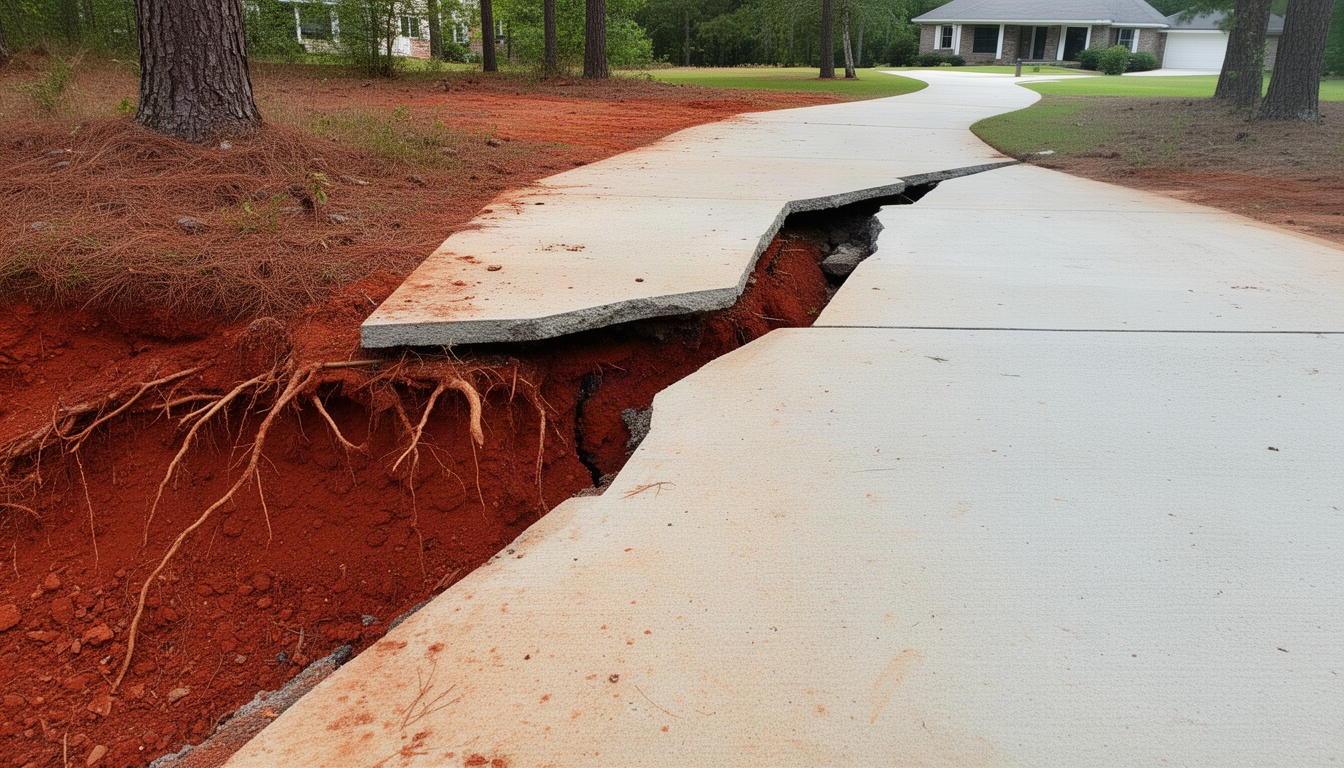
Concrete Driveway Installation in Conyers, GA: Dekalb Concrete serves Conyers and the surrounding area within a 15-mile radius. Visit dekalbconcretellc.com for a free quote.
TL;DR: Concrete slab heaving in Conyers happens because Georgia's Piedmont red clay expands when saturated, and our area receives nearly 50 inches of rain annually - well above the U.S. average. Tree roots and poor drainage amplify the problem. Repairs range from $3–$6 per square foot for mudjacking to $6–$12 per square foot for full replacement. The key is distinguishing heaving (soil pushing up) from settling (slab sinking) before choosing a fix.
In This Article
- What Does Concrete Slab Heaving Actually Mean?
- Why Does Slab Heaving Happen in Conyers Specifically?
- Which Types of Slabs Are Most At Risk in Conyers?
- How Do You Know If Your Slab Is Heaving vs Settling?
- What Are Your Repair Options and What Do They Cost?
- How Can You Prevent Concrete Heaving in Conyers?
- Finding Reliable Concrete Repair in Conyers
- Frequently Asked Questions About Slab Heaving in Conyers
- Next Steps: Get a Free Estimate
What Does Concrete Slab Heaving Actually Mean?
Concrete slab heaving is when your driveway, patio, or foundation floor pushes upward - sometimes dramatically - rather than staying level. You'll notice raised edges, visible gaps between panels, or cracks running across the surface. It's the opposite of settling, where a slab sinks into voids or soft soil.
Here in Conyers, heaving is a real problem because of what's happening beneath the surface. (Dot.gov) (Usda.gov) The soil under your slab isn't just sitting there passively. When it gets wet - and in Rockdale County, it gets very wet - it expands with tremendous force. That upward pressure is what lifts your concrete.
The distinction matters because the two problems require completely different repairs. If you treat heaving like settling, the fix won't hold. Understanding which one you have is the first step toward a solution that actually lasts.
Why Does Slab Heaving Happen in Conyers Specifically?
Conyers sits in Georgia's Piedmont region, where the dominant soil is Cecil and Appling clay series - both highly expansive. According to the USDA soil survey for Rockdale County, these soils have "high shrink-swell potential that can affect foundations and pavements." That's the technical way of saying your soil moves a lot.
Here's the physics: when clay soil absorbs water, water increases in volume by nearly 10% when it freezes, as documented by Atlanta Basement Systems. On a 4-inch slab base, that expansion creates hundreds of pounds per square foot of upward pressure. In winter and spring, when Conyers averages heavy rainfall, that pressure builds steadily.
Our area receives approximately 49–50 inches of annual precipitation - significantly above the U.S. average of 38 inches. That extra moisture means our clay soils go through multiple wet-dry cycles every year. Each cycle cracks the concrete a little more, allowing water to seep deeper, which triggers more expansion. It's a progressive damage loop.
Key Takeaway: Conyers' combination of expansive clay soil and above-average rainfall creates ideal conditions for slab heaving. This isn't a problem unique to your property - it's a regional soil and climate issue.
Georgia Clay Soil and Moisture Expansion
The Cecil clay loam that dominates Rockdale County residential areas contains clay minerals that absorb water like a sponge. Soils with a high clay content expand significantly when they get wet, according to Atlanta Basement Systems. When saturated, the soil swells. When it dries, it shrinks. Your concrete slab sits on top of this moving foundation, flexing with every seasonal change.
Winter and spring bring the heaviest rainfall in Georgia. That's when your subgrade is most saturated and most likely to heave. By summer, the soil dries and shrinks slightly, but the damage - cracks, misalignment - persists. Next winter, the cycle repeats, and the cracks worsen.
This seasonal pattern is why many Conyers homeowners notice heaving problems appearing or worsening in late winter and early spring, after months of rain.
Tree Root Pressure Under Slabs
Tree roots are the second major cause of slab heaving in our community. Water Oak, Sweet Gum, and Willow Oak - all common in Conyers neighborhoods - have aggressive, shallow lateral root systems. These roots can spread 20–30 feet from the trunk and often run directly under driveways and patios.
As roots grow, they exert upward pressure on the slab. Unlike uniform clay expansion, root-caused heaving typically appears as asymmetric lifting - one side of a panel rises more than the other, and the slab tilts toward the tree. If you see a raised edge closest to a mature tree on your property, roots are likely the culprit.
Poor Drainage and Water Pooling
Many Conyers subdivisions built in the 1990s and 2000s have drainage problems. Original grading has shifted over time, or downspouts terminate too close to the house. Water pools against the foundation and under slabs, keeping the clay soil perpetually saturated.
The Georgia Stormwater Management Manual recommends a minimum 6-inch drop in elevation over the first 10 feet away from structures. Most residential lots in our area fall short of this standard. When water doesn't drain away, clay expansion accelerates, and heaving worsens.
Which Types of Slabs Are Most At Risk in Conyers?
Not all concrete slabs heave equally. Some are far more vulnerable than others, depending on their location, size, and exposure to moisture.
| Slab Type | Risk Level | Why |
|---|---|---|
| Driveways | High | Exposed to rainfall, vehicle weight, and moisture from below. Edges are especially vulnerable. |
| Patios | High | Often adjacent to trees; edges lift from root pressure and soil saturation. |
| Sidewalks & Walkways | Medium | Narrower profile means less weight to resist heave; freeze-thaw cycles in Georgia winters can contribute. |
| Basement Floor Slabs | Very High | Hydrostatic pressure from saturated clay below plus swelling pressure from the soil itself. |
| Garage Slabs | High | Similar to driveways; weight and moisture exposure create ideal heaving conditions. |
Driveways and patios are the most common problem areas we see in Conyers. They're large, exposed, and often built over clay soil with poor drainage. Basement floor slabs are the most severe because they're confined - the slab can't move upward freely, so pressure builds internally, causing cracking and buckling.
How Do You Know If Your Slab Is Heaving vs Settling?
Direct Answer: Heaving means soil is pushing the slab upward; settling means the slab is sinking into voids or soft soil below. The visual signs are opposite, and the repairs are completely different.
Signs of Heaving:
- Raised panels or edges, especially at the perimeter
- Gaps between the slab and adjacent structures (foundation, curb)
- Cracks that form at the high point of the raised section
- Doors or gates that stick or won't close properly
- Asymmetric lifting (one corner higher than others)
Signs of Settling:
- Low spots or depressions in the slab surface
- Water pooling on the concrete
- Cracks that form at the low point
- Sinking edges, especially near trees or drainage areas
- Gaps opening between the slab and the foundation (opposite of heaving)
The key diagnostic: if the slab is higher than it was before, it's heaving. If it's lower, it's settling. If you're unsure, a professional can confirm by measuring the slab elevation at multiple points.
This distinction is critical because mudjacking (pumping material under the slab to lift it) works for settling but won't solve heaving. For heaving, you need to address the soil expansion itself - either by improving drainage, removing the heaving pressure, or replacing the slab entirely.
What Are Your Repair Options and What Do They Cost?
Here in Conyers, you have four main repair paths. The right choice depends on the severity of heaving, the slab size, and whether you want to address the root cause.
Option 1: Mudjacking (Slabjacking) Cost: $3–$6 per square foot Best for: Minor to moderate heaving; slabs that have settled into voids
Mudjacking involves drilling holes in the slab and pumping a cement-based slurry underneath to re-level it. Mudjacking costs about $3–$6 per square foot, according to Michigan Basements. It's faster and cheaper than replacement, but it doesn't fix the underlying soil expansion. In Conyers' clay soil, mudjacking repairs typically last 5–10 years before re-leveling is needed. For a 400 sq ft driveway, expect $1,200–$2,400.
Option 2: Polyurethane Foam Lifting Cost: $5–$25 per square foot Best for: Lighter residential slabs; areas with limited access; faster cure times needed
Foam Injection costs range from $5–$25 per square foot depending on the volume needed, as Michigan Basements notes. Polyurethane foam is injected under the slab and expands to lift it. It cures in 15–30 minutes (vs. 24 hours for mudjacking) and resists water absorption better. The longer lifespan (10–15 years in clay soil) can justify the higher upfront cost.
Option 3: Full Slab Replacement Cost: $6–$12 per square foot Best for: Severe heaving; multiple fracture planes; slabs with more than 1-inch displacement
Replacement removes the old slab and pours new concrete with proper base preparation and drainage. For a 400 sq ft driveway, expect $2,400–$4,800. This is the most expensive option but provides a fresh start. If drainage and soil issues are corrected during replacement, the new slab should perform significantly better.
Option 4: Root Barrier Installation + Re-leveling Cost: $200–$600 for a 20-foot run, plus re-leveling costs Best for: Tree root–caused heaving; preventing recurrence
If tree roots are the primary cause, installing a physical root barrier 18–24 inches deep can redirect root growth away from the slab. This should be combined with mudjacking or foam lifting to re-level the existing slab.
Real-World Example: A 400 sq ft Conyers driveway heaving from clay expansion. Mudjacking at $5/sq ft = $2,000. Full replacement at $9/sq ft = $3,600. By choosing mudjacking, the homeowner saves roughly $1,600 upfront - though they may need re-leveling in 7–10 years.
How Can You Prevent Concrete Heaving in Conyers?
Prevention won't eliminate heaving entirely - our clay soil and rainfall are facts of life here - but it can significantly reduce the frequency and severity of problems.
Improve Grading and Drainage Ensure water slopes away from your slab at a minimum 6-inch drop per 10 feet. If your lot is flat or slopes toward the house, consider regrading or installing a French drain to redirect water. This is the single most effective prevention step.
Extend Downspouts Downspouts should terminate at least 6 feet away from the foundation and any adjacent slabs. If water discharges right next to your driveway or patio, it saturates the soil directly beneath, accelerating heaving.
Install Root Barriers If mature trees are within 20–30 feet of your driveway or patio, consider installing a root barrier. This redirects roots downward rather than laterally under the slab.
Seal Concrete Joints Annually Control joints should be placed no more than 24 to 36 times the slab thickness, and sealing every 2 to 3 years helps prevent water damage, according to Atlanta Concrete Solutions. Joints and cracks are entry points for water. Sealing them annually reduces moisture infiltration into the subbase, slowing the expansion cycle. This is especially important in Georgia's wet climate.
Avoid Overwatering Landscaping Irrigation systems near slabs keep the soil perpetually moist, accelerating clay expansion. Water landscaping away from concrete, or use drip irrigation that doesn't pool water against the slab.
Schedule Spring Inspections After Georgia's wet winter and spring season, inspect your slabs for new cracks or raised edges. Early detection allows you to address problems before they worsen.
Finding Reliable Concrete Repair in Conyers
When heaving damage appears, choosing the right contractor matters. You need someone who understands Rockdale County soil conditions, can accurately diagnose heaving vs. settling, and can recommend the repair method that fits your situation and budget.
Dekalb Concrete serves Conyers and the surrounding area with free estimates on concrete repair, replacement, and prevention. They can assess your slab, explain what's causing the heaving, and walk you through your repair options with transparent pricing. Whether you need mudjacking, foam lifting, or full replacement, a professional evaluation ensures you're not overpaying for a fix that won't last.
The key is getting a written estimate that specifies the repair method, materials, and expected longevity. Don't rely on phone quotes - have someone inspect the slab in person and provide a detailed proposal.
Frequently Asked Questions About Slab Heaving in Conyers
How much does it cost to fix a heaving concrete slab in Conyers?
Direct Answer: Mudjacking typically costs $3–$6 per square foot; polyurethane foam lifting runs $5–$25 per square foot; full replacement costs $6–$12 per square foot. A typical 400 sq ft driveway repair ranges from $1,200 to $4,800 depending on the method.
Costs vary based on slab size, access difficulty, and how severe the heaving is. A professional inspection with a free estimate will give you an accurate quote for your specific situation.
Is concrete heaving covered by homeowners insurance in Georgia?
Direct Answer: No. Standard homeowners insurance policies in Georgia exclude damage caused by earth movement, soil expansion, or foundation settling - including heaving. This is classified as a ground movement exclusion.
However, if heaving is triggered by a covered peril (like a burst water line saturating the subgrade), the resulting damage may be covered. Document any triggering event and contact your insurer to discuss your specific policy.
What is the difference between concrete heaving and concrete settling?
Direct Answer: Heaving is when soil pushes the slab upward; settling is when the slab sinks into voids or soft soil. Heaving creates raised panels and tight cracks at the high point; settling creates low spots and open cracks at the edges.
The repairs are opposite: mudjacking works for settling but won't fix heaving. For heaving, you need to address soil expansion through drainage improvement, root removal, or slab replacement.
Can I fix a heaving concrete slab myself or do I need a contractor?
Direct Answer: You cannot fix heaving yourself. Mudjacking, foam lifting, and slab replacement all require specialized equipment and expertise. Attempting DIY repairs will waste money and likely make the problem worse.
What you can do: improve drainage, seal joints, and trim tree roots to prevent future heaving. For actual repair, hire a licensed concrete contractor.
How long does a concrete slab repair last in Georgia clay soil?
Direct Answer: Mudjacking typically lasts 5–10 years in Conyers' clay soil; polyurethane foam lifting lasts 10–15 years; full replacement should last 20+ years if drainage and soil issues are corrected.
Longevity depends heavily on whether the root cause (poor drainage, tree roots, soil expansion) was addressed. Repair alone without cause correction will fail sooner.
Will tree roots keep causing heaving even after repairs?
Direct Answer: Yes, if the tree remains and roots continue growing under the slab. After repair, install a root barrier 18–24 inches deep along the slab edge to redirect root growth downward and away from the concrete.
Combining re-leveling with root barrier installation prevents recurrence. If the tree is very close to the slab and roots are extensive, removal may be the only permanent solution.
What should I do if I notice my driveway or patio starting to heave?
Direct Answer: Document the problem with photos showing raised edges, cracks, or gaps. Contact a local concrete contractor for a free inspection and written estimate. Don't wait - early intervention is cheaper and more effective than waiting for severe damage.
In the meantime, improve drainage around the slab by extending downspouts and ensuring water slopes away from the concrete.
How do I know if my Conyers home is in a high-risk area for slab heaving?
Direct Answer: If your home is built on clay soil (common throughout Rockdale County), you're at risk. If you have mature trees near your driveway or patio, risk increases. If your lot has poor drainage or slopes toward the house, heaving is more likely.
A soil survey or professional inspection can confirm your specific risk level. Most Conyers properties have at least moderate risk due to regional soil and climate conditions.
Next Steps: Get a Free Estimate
If you're seeing signs of heaving on your driveway, patio, or foundation - raised edges, cracks, or gaps - the next step is a professional assessment. Dekalb Concrete offers free estimates for concrete repair and replacement throughout Conyers and the surrounding area. They'll diagnose whether you're dealing with heaving or settling, explain your repair options, and provide a written quote with transparent pricing.
Call our Conyers team today to schedule your free inspection. The sooner you address heaving, the more repair options you'll have and the less damage will occur to adjacent structures.
Ready to Get Started?
For personalized guidance, visit Dekalb Concrete to learn how we can help.